
Environment Focus
An environmental lens on policies for better lives
Closing the credibility gap: Aligning corporate near-term actions with long-term net-zero targets
by Kern Fastrup, OECD Environment Directorate

Record-breaking temperatures and frequent climate disasters have become a new unsettling reality, causing billion-dollar losses and reversing global development. In response, corporates are stepping up action on climate change. Although still not ubiquitous, net-zero commitments are rapidly becoming commonplace in many companies. The Science Based Targets initiative (SBTi) estimates that companies with science-based targets now represent 34% of the global economy by market capitalisation.
While this may appear promising, not all of those with targets have interim ones. Only 26% of the combined assets under management of the 77 largest asset managers with net-zero pledges have set interim targets for 2030 or earlier. Moreover, less than one third of companies included in the CDP’s Corporate Environmental Action Tracker are on track to meet their climate targets. This gap between long-term targets and near-term actions calls into question the credibility of these commitments, underlines greenwashing risks and has the potential to compromise market integrity.
Read MoreHow the need to mitigate climate change will affect careers and what to do about it
By Elisa Lanzi (OECD Environment Directorate), Francesca Borgonovi (OECD Centre for Skills) and Helke Seitz (OECD Centre for Skills)
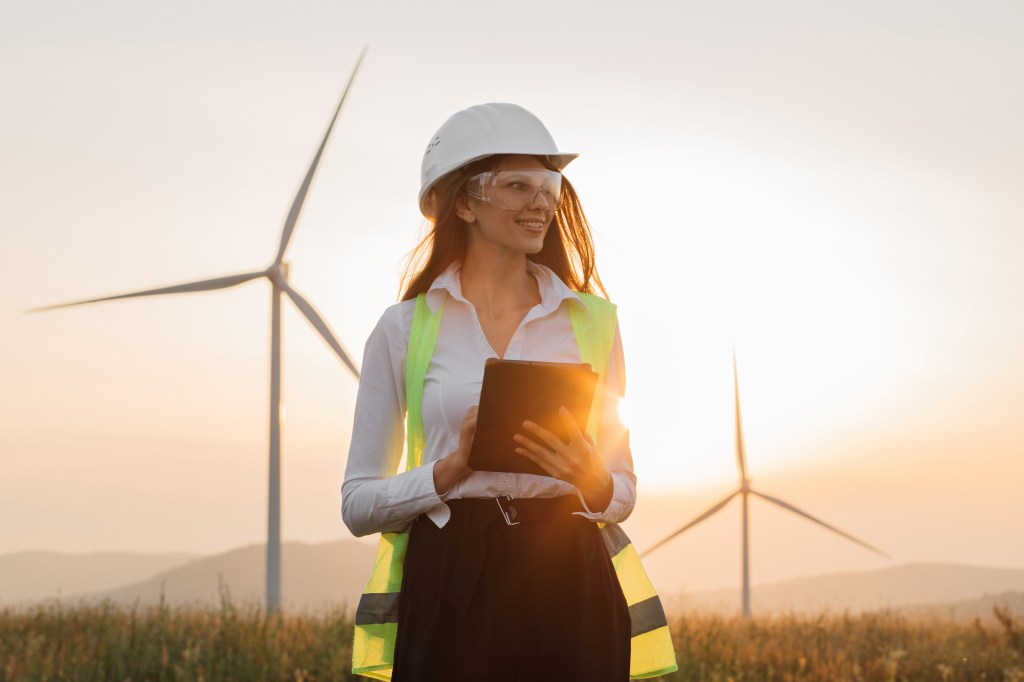
Students around the world who have recently finished their secondary education are about to face a new phase of their lives. Those planning to continue their studies, whether in a university setting or through a vocational education and training course, are making choices that will impact their future career prospects.
Many factors influence people’s plans for training and education: a passion for a specific subject or an activity; employment opportunities; and location, to name a few. With efforts to mitigate climate change affecting economies and increasing the demand for green occupations, a key question is whether climate change and climate change mitigation policies should become a deciding factor for educational choices.
Read MoreHow are European cities addressing climate change-induced water scarcity?
By Sophie Lavaud, Simon Touboul and Catherine Gamper, OECD Environment Directorate

Just as we thought we could get out of an unprecedented global drought that marked the year of 2022, the world continues to face a ferociously dry summer. Spain is struggling with the impacts of never-ending drought conditions: since 30 months droughts have led to unprecedented water restrictions, conserving the limited stock of water reserves only for households and selected agricultural and industrial uses. Low groundwater levels have led bottled potable water producers to close down facilities and suppress jobs in France. Entering an El Niño period worsens the prospects of relief in the couple of years ahead. As droughts impact water supply, they can generate water scarcity risks if water demand is left unchecked.
Read MoreAccelerating climate action: 12 steps for governments to build climate and economic resilience
By Kilian Raiser, OECD Environment Directorate

Action on climate change has never been more urgent. With current levels of global warming, scientists warn that some catastrophic climate system ‘tipping points’ are already dangerously close to being triggered. Governments and society must act fast to reduce emissions and adapt to already “baked in” climate impacts. Yet countries remain far off track in implementing climate policies at the necessary scale and speed.
Climate action does not happen in a vacuum, isolated from the world’s other equally-urgent policy priorities. Climate policies need to go beyond the sole aim to reduce emissions, and must also aim to be cost-effective, fair and equitable, politically tenable, compatible with health, social and fiscal policy and aligned with foreign policy concerns. Above all, they need to be resilient in the face of future disruptions.
Read MoreRising up to build resilience to droughts in a changing climate
By Catherine Gamper, Sophie Lavaud and Agnes Szuda, OECD Environment Directorate

17 June marks the World Day to Combat Desertification and Drought, a year after unprecedented droughts plagued regions across the world. In Europe, the Po River basin – Italy’s breadbasket – faced the worst drought in 70 years, after rainfall in early 2022 was about half of the yearly average of the past 30 years and caused an estimated EUR 6 billion in damages to agricultural sector. The low water levels on European rivers reduced hydroelectric and nuclear power production in many countries. Romania’s biggest energy producer generated a third less hydropower in early 2022 than usual. The river Danube flowed at less than half of its typical summer volume, leaving dozens of cargo ships motionless. Low levels on the river Rhine – on which 160 million tons of goods are transported every year – forced vessels to reduce their load and companies to find road or train transport alternatives, disrupting industrial production in Germany’s Ruhr region. Projections also show that 74% of Spain’s territory is at risk of desertification if water management does not dramatically change current trends. At the same time, the Horn of Africa experienced its fifth consecutive dry year and over 20 million people in the region required food and water assistance to fight starvation. Droughts are clearly affecting people’s lives in different regions, with uneven consequences and social inequalities in the distribution of climate impacts.
Read MoreA global pioneer addressing water scarcity – how can Israel face other pressing environmental challenges?
by Sho Yamasaki, OECD Environment Directorate

Israel is one of the world’s most arid countries, but its small open economy is fertile ground for tech-driven innovation. The country boasts the highest concentration of start-ups per capita in the world. Tech start-ups and their dynamic ecosystem in Tel Aviv represent Israel’s increasingly vibrant economic scene. Technological innovation has also contributed to addressing environmental issues, such as water scarcity. The adage “necessity is the mother of invention” couldn’t be more apt; Israel’s high water-stress has helped propel the country to the forefront of innovation for sustainable water management. Its five desalination plants are among the most efficient in the world, supplying over 80% of domestic urban water. Large-scale reuse of wastewater and drip irrigation technologies have promoted sustainable water usage for agriculture.
Read MoreWhat are the economic and environmental effects of the European Union Emissions Trading Scheme?
By Daniel Nachtigall, OECD Environment Directorate and Antoine Dechezleprêtre, OECD Directorate for Science Technology and Innovation
The European Union (EU) put forward an ambitious climate mitigation target of reducing greenhouse gas (GHG) emissions by at least 55% below 1990 levels by 2030. How will the EU deliver? Carbon pricing – through the European Union Emissions Trading System (EU ETS) – is expected to deliver a large part of the emissions reductions. Under an ETS, installation operators can trade GHG emission permits with each other, ensuring that emissions are reduced cost-effectively. Launched in 2005, the EU ETS is the world’s first international ETS, covering over 14,000 energy-intensive plants across 30 European countries, accounting for around 40% of the EU’s total GHG emissions. From the outset the EU ETS raised concerns about its environmental effectiveness and potential negative economic effects for the European industry by putting regulated firms at a disadvantage vis-a-vis their foreign competitors.
Read MoreFinancing Water: beyond traditional economic thinking, it’s time for global action
by Aude Farnault and Xavier Leflaive, OECD Environment Directorate

As leaders prepare to gather in New York later this month at the UN 2023 Water Conference[1], the world turns its attention to the critical importance of water in the global development agenda and the essential role of finance in translating political ambitions into action on the ground.
The ninth meeting of the Roundtable on Financing Water, co-convened with UN Water, gathered the water and finance communities in Geneva on 7-9 February to bring a financial perspective to the Water Action Agenda, the main expected outcome of the UN 2023 Water Conference. It benefited from the substantive input of the Global Commission on the Economics of Water, which aims to redefine the way we value and govern water.
The meeting testifies that the narrative on water is changing, and this affects how water and finance can engage with one another.
Read MoreHow have governments’ climate policies evolved in the last decade?
by Daniel Nachtigall, OECD Environment Directorate

We have seen a growing number of countries strengthen their emission reduction pledges by updating their Nationally Determined Contributions (NDCs) or by pledging carbon neutrality targets towards mid-century. But with the increasing urgency of the climate crisis, what are countries actually doing to implement these targets and how has the climate policy landscape evolved over the last decade or so?
The OECD’s recently released Climate Actions and Policies Measurement Framework (CAPMF) provides answers to this question. The CAPMF is the most comprehensive harmonised international climate policy database to date with 128 policy instruments and climate actions (grouped into 56 policies), spanning the period 2000-2020 and covering 51 countries (OECD, G20 and OECD accession candidate countries) and the EU 27. This Framework was developed by the OECD International Programme for Action on Climate (IPAC) as part of a broader effort to develop indicators to support country progress towards net-zero GHG emissions.
Read MoreRediscover our top 5 blogs of 2022
2022 has been a year of environmental milestones, in a world faced with climate change and biodiversity loss.
Rediscover our top 5 blogs from 2022 to learn more on a range of topics including ‘green water’, pandemic recovery, Norway’s environmental performance, and the environmental impact of expired medicine.
Read More Environment Focus